lined link to go to subject)
 - Contents
Chapter 1. Vision
System Design
Chapter 2. Biological Eye Designs
Chapter 3.
Eye
Design
Illustrations
A.
Plant
light sensing
1.
Grass, simple vines,
and stems
2.
Flowers
B.
Lower
animal eyes
1.
Flatworms
2.
Clams and Scallops
3.
Nautilus
4.
Shrimp
5.
Crab
6.
Octopus and
giant squid
7.
Spiders
8.
Scorpions
8.
Brittle Star
C.
Insect
eyes
1.
Bees
2. Dragonflies
3. Butterflies
4.
Flies
5.
Ants
6.
Moths
7.
Beetles
8.
Wasp
D. Fish
eyes
1.
Shark
2.
Flounder
3.
Four-eyed fish
E.
Amphibian
eyes
1. Frog
2.
Salamander
F.
Reptile
eyes
1. Boa
constrictor
2.
Rattle
snake
3.
Lizard
4.
Turtle
5.
Crocodile
and
alligators
G. Bird
eyes
1.
Eagles
2.
Hummingbirds
3. Owls
4.
Ostrich
5.
Cormorants
H.
Mammal
eyes
1.
Whales
2.
Elephants
3. Lions,
tigers, and
other cats
4.
Monkeys
5. Rats
and mice
6. Bats
7.
Tarsier
I.
Human
eyes
1. Iris
2. Lens
3.
Retina
Chapter
4. Eye
Reproduction
Chapter
5. Optical
Systems
Design
Chapter
6. The Eye Designer
Related
Links
Appendix
A - Slide Show & Conference Speech by Curt Deckert
Appendix
B - Conference Speech by Curt Deckert
Appendix
C - Comments From Our Readers
Appendix
D - Panicked Evolutionists: The Stephen Meyer Controversy
Chapter 3
Section F
- Prev Page
Go
to Chapter Links
-  Next Page
-
Next Page
- 
(Click on PICTURE IN TEXT to bring up LARGE PICTURE)
3. EYE DESIGN ILLUSTRATIONS
F.
Reptile eyes
Reptiles have a rich
history, including some very large animals that are now extinct. The
eyes of extinct creatures may have been more complex than many eyes of
previously discussed animals. In some cases, reptile eyes may have
features beyond the capabilities of the amphibian. This is partially
evidenced by the order of hunting, where the reptile hunts the
amphibian.
1.
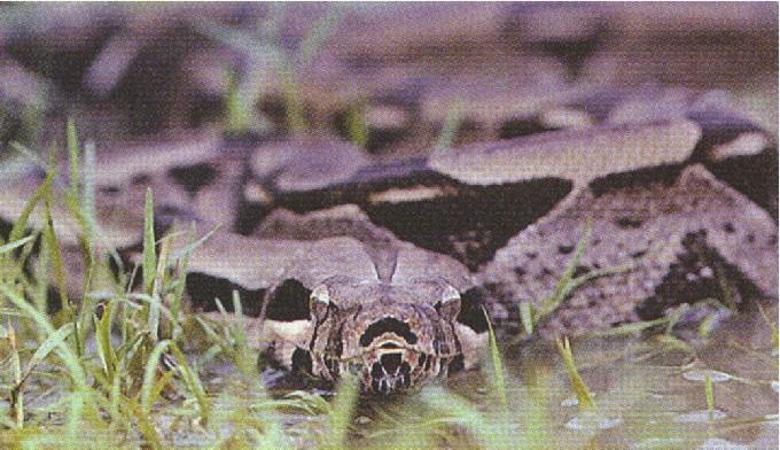
Boa constrictor
The boa constrictor
is nonvenomous and has color vision, some also have extended infra-red
(IR) vision well beyond where humans can see. This enables it
to sense temperature differences of less than 0.03 degrees centigrade
at a significant distance, and thus find live targets in dense rain
forests. Their IR vision system is being studied by the military to see
how such a detector, useful for night vision, can function without
being cooled to a very low temperature. (Figure 3.32 from p 204,
Readers Digest, Exploring the
Secrets of Nature, 1994) (Figure
3.32b from p 61, and figure 3.32c from p 64, Reptiles
& Amphibians)
click on small graphic) |
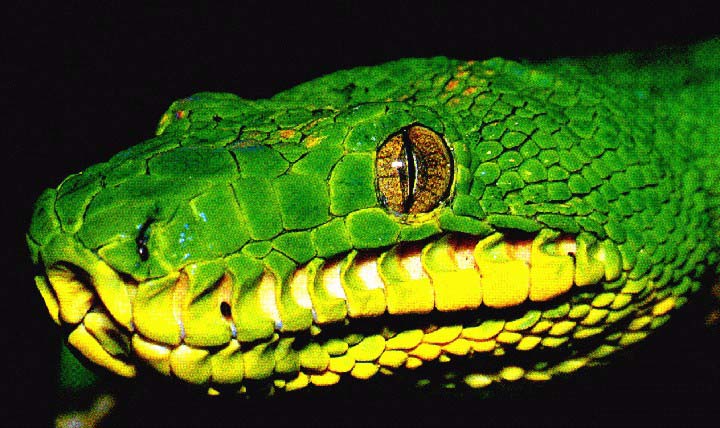
Tree Boa Eyes. |
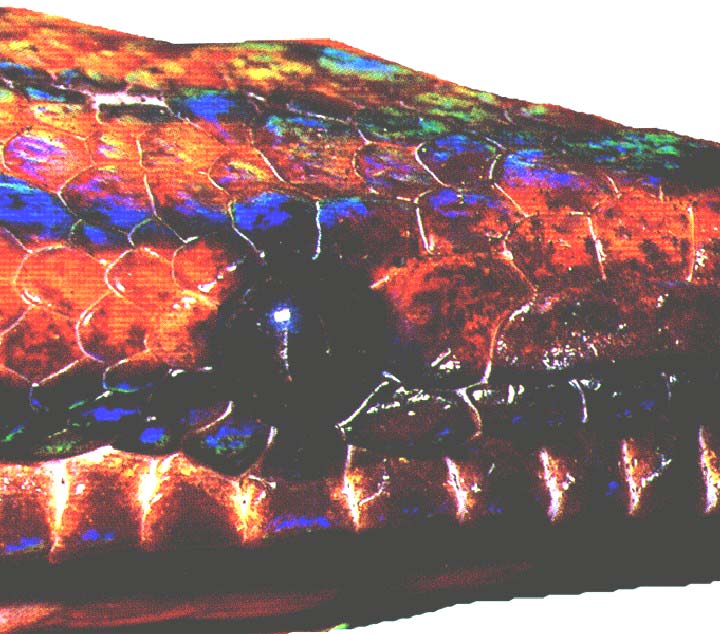
Rainbow Boa Eyes. |
|
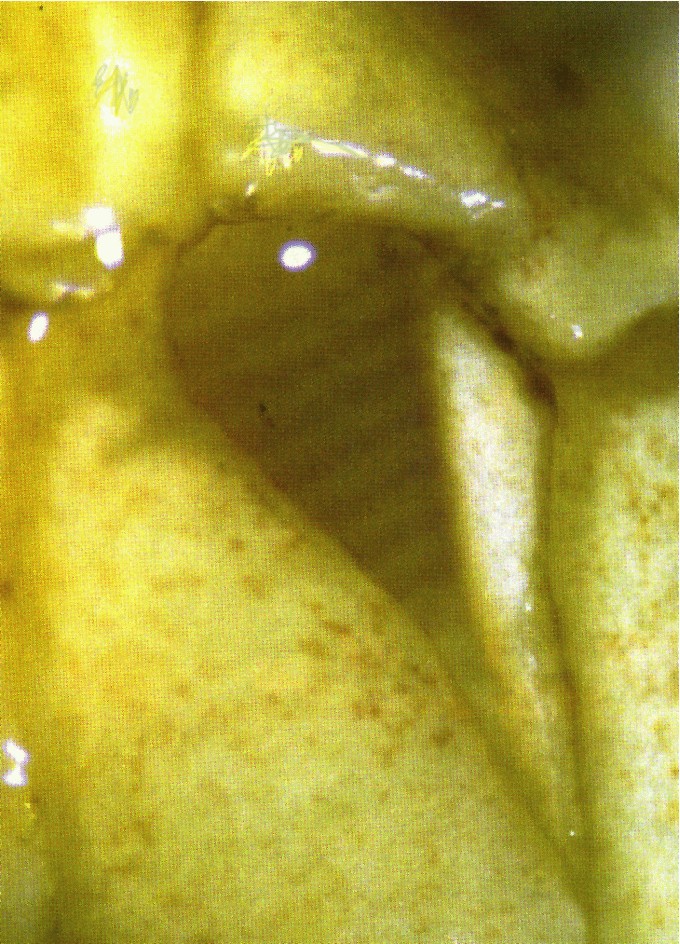
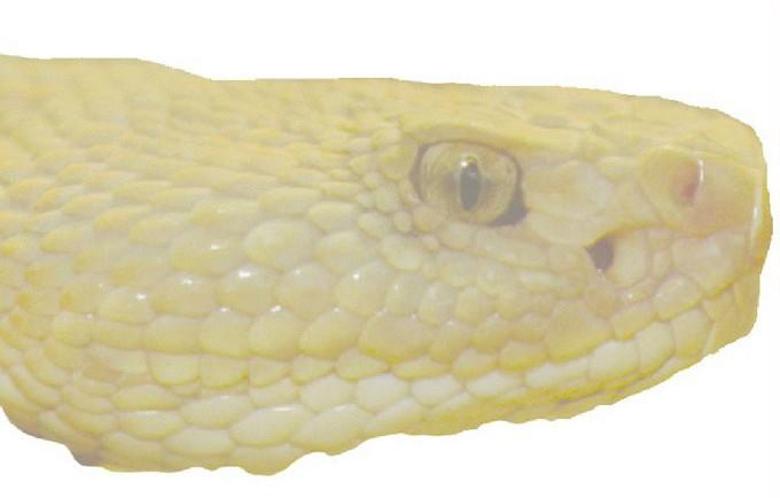
Figure 3.32d shows an
organ of a Boa IR vision system. It has been well known that snakes
have thermal vision. Scientists at Florida Institute of technology are
one of the groups analyzing that vision. This research could result in
better IR vision for scientific, industrial, safety, and medical
applications. The vipers system is roughly 10 times better than typical
cooled infrared detector system presently available. Some very large IR
systems may approach and exceed the Boa resolution, but they are not
practical for many applications. The organ detects IR energy and relays
it to the brain that creates a map or image of the field of view. As a
result, these snakes are able to see well beyond human vision clear out
to approximately 8-12 micron wavelengths. Snakes may use the visual
system to calibrate the thermal vision or vice versa. The organ may
have unusual topography that may function as a spectral filter.
(reference: Biophotonics
International, May 2002, page
28) In a recent example of scientists looking to snakes, such as that shown below in Figures 3.33a-d, to provide clues for IR radiation detection, scientists from Iowa State University have used a scanning probe microscope to analyze IR reception in beetles. More recently, they have focused their efforts on micro structural and thermal properties of Burmese and ball python pit organs. These pit organs are located near the eye. They have infrared receptors that allow them to hunt using thermal imaging. This research could provide new thermal imaging optical designs. (Today's Chemist at Work, March, 2002, page 10) Work is still going on to understand the IR vision systems of these snakes. Other snakes may look slightly similar, such as the Garter Snake. |

|
2. Rattlesnake
The rattlesnake is a smaller pit viper that lives in drier, less vegetated areas of the earth. They need to see small living targets in open areas. These snakes can sense very small temperature differences of about 0.05 degree centigrade and find warm targets to attack without visible light. These targets, invisible to human eyes at night, require vision in the infrared spectral range. Because of their vision in the infrared (IR) spectral region, these snakes have the ability to hunt and attack at any time. This compact and efficient IR vision capability is also desirable for current military equipment developments. (Rattlesnake photos by Bruce Chambers)
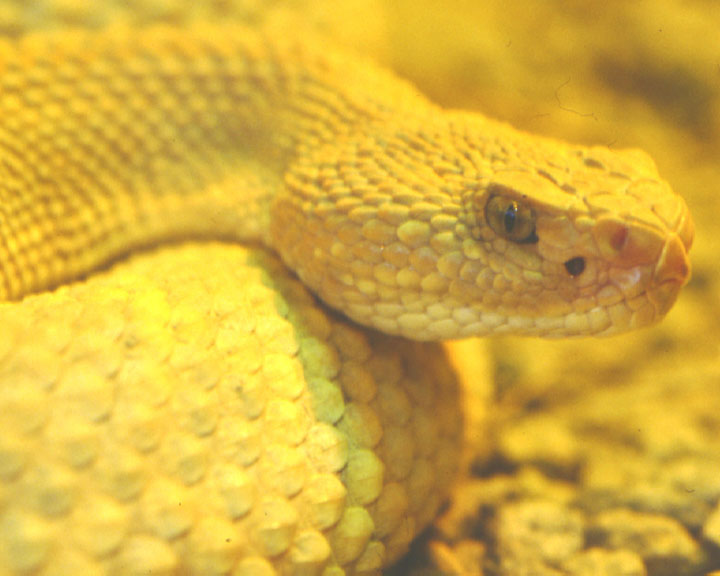
Island Rattlesnake. |

Island Rattlesnake. |
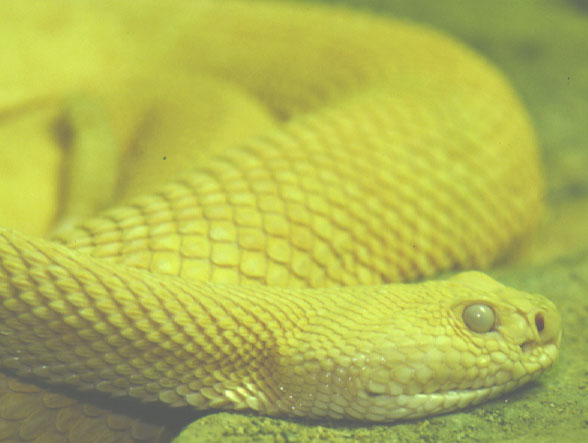
Diamondback Rattlesnake |
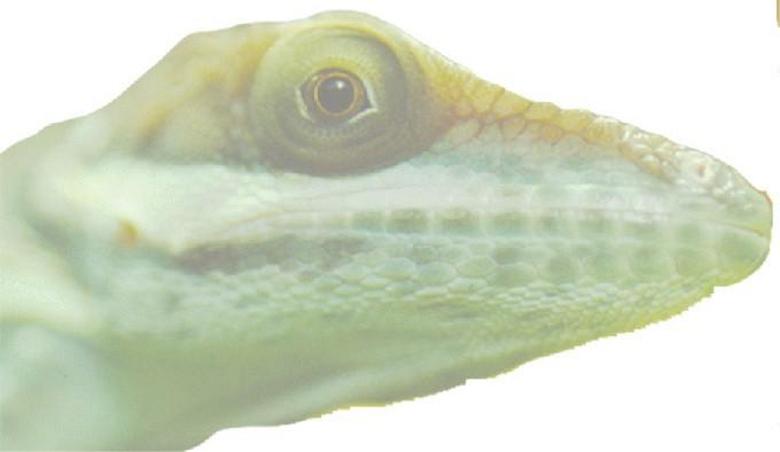
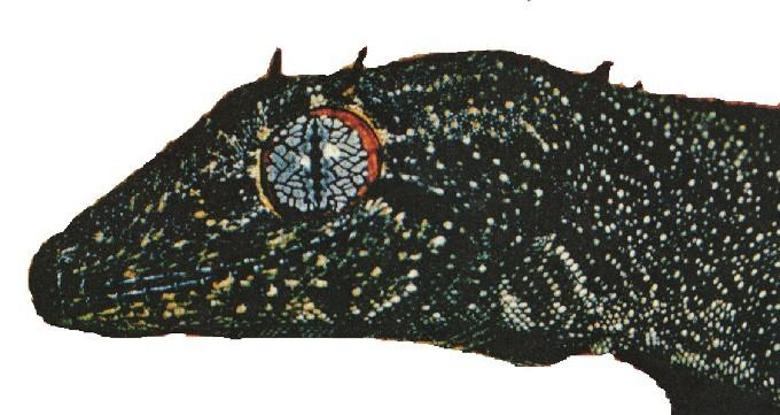
Reptiles & Amphibians |
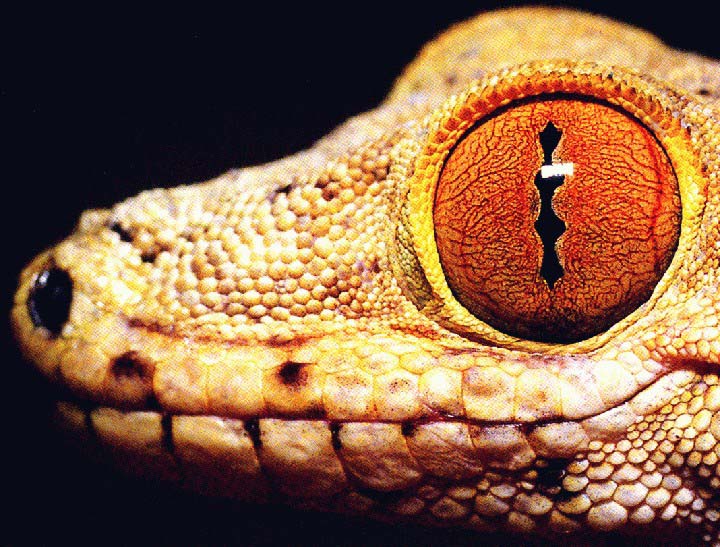
Reptiles & Amphibians |
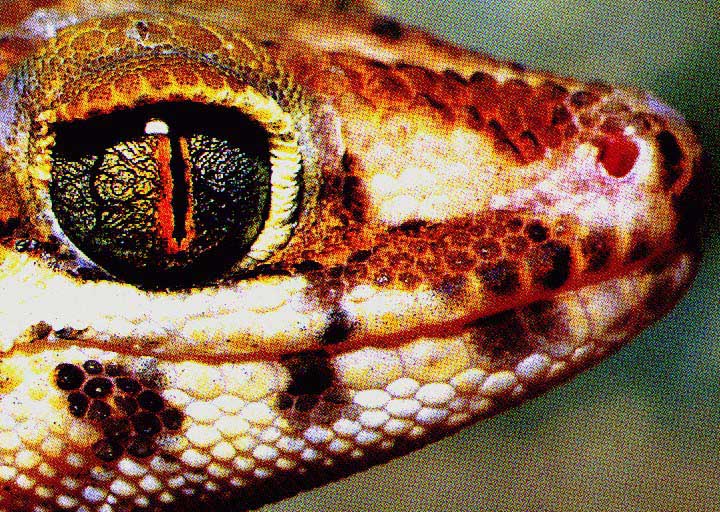
Reptiles & Amphibians |
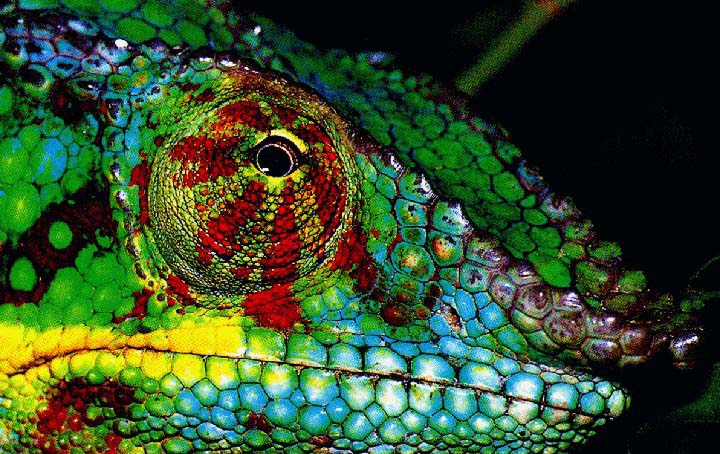
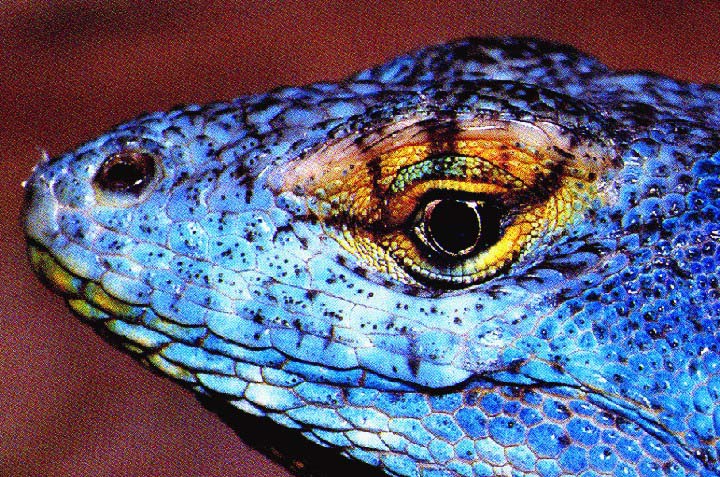
Chameleon Eyes, p 48 Reptiles & Amphibians |
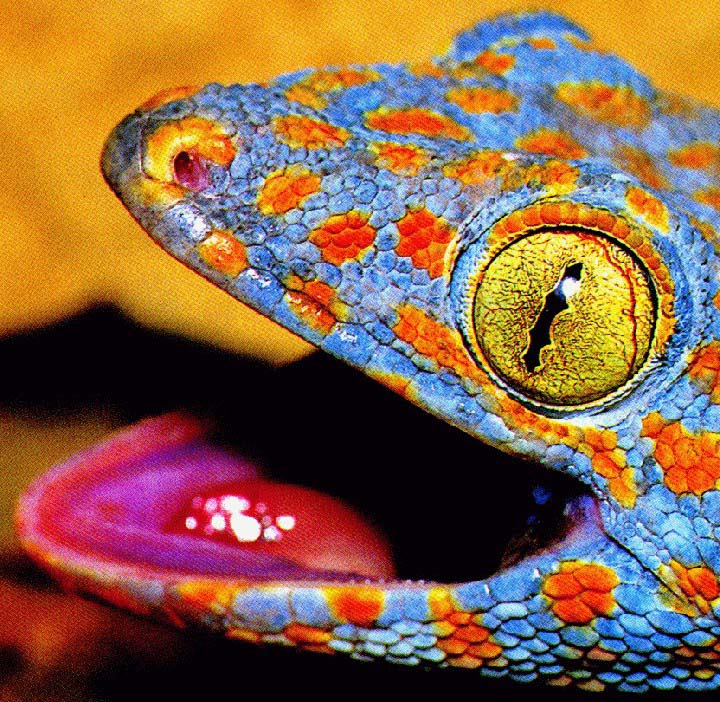
Tokay Gecko Eyes, p 23 Reptiles & Amphibians |
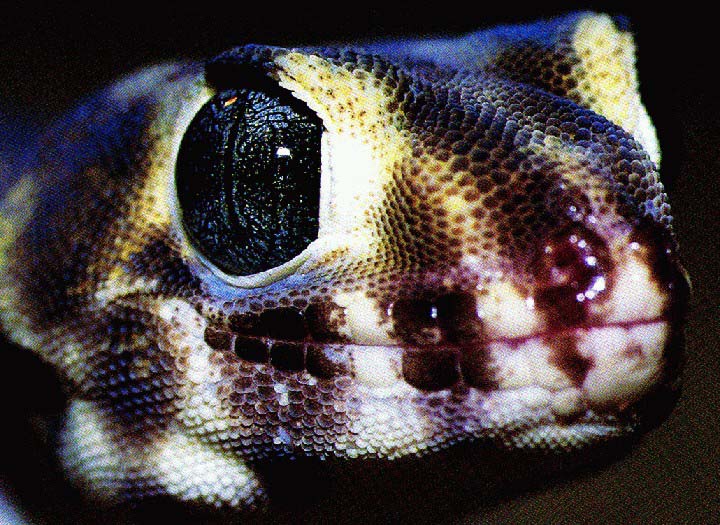
Wonder Gecko Eyes, p 26 Reptiles & Amphibians |
4. Turtles
Turtles do not see
as well as humans. Their retina is made up primarily of cones. Eye
lenses are flat for land turtles, and more spherical for sea turtles.
Special oil ducts emit droplets in turtle eyes. This oil is
used for optical color filtering, much like filtering in
some bird eyes. Their vision is best in the yellows, oranges,
and reds. If disturbed, they can retract their head into their bodies
to protect their eyes. Turtles lay eggs in the same area year after
year. Some may even travel with their eyes closed. They must have
significant navigation capability in addition to vision as we know it.
This would indicate some intelligence beyond that connected to visual
capability. (P. 168, Readers Digest, Exploring
the Secrets of Nature, 1994)
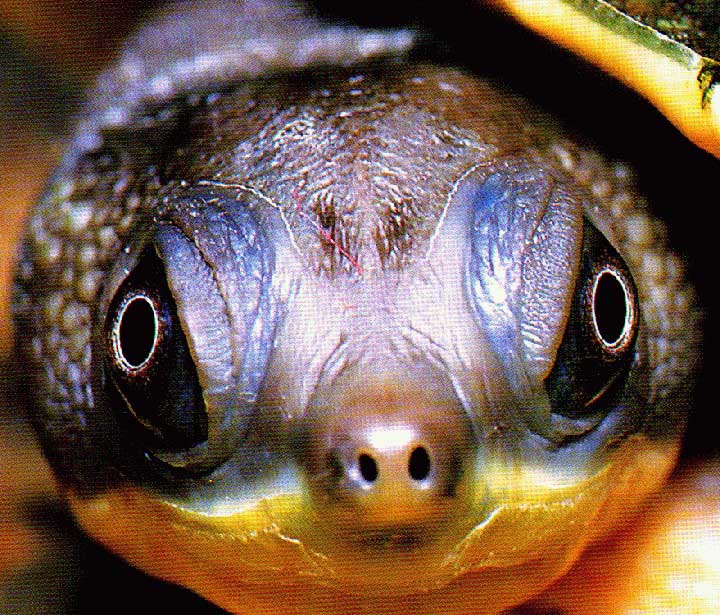
Guinea Snapping Eyes, p 71 Reptiles & Amphibians |

p 77 Reptiles & Amphibians |
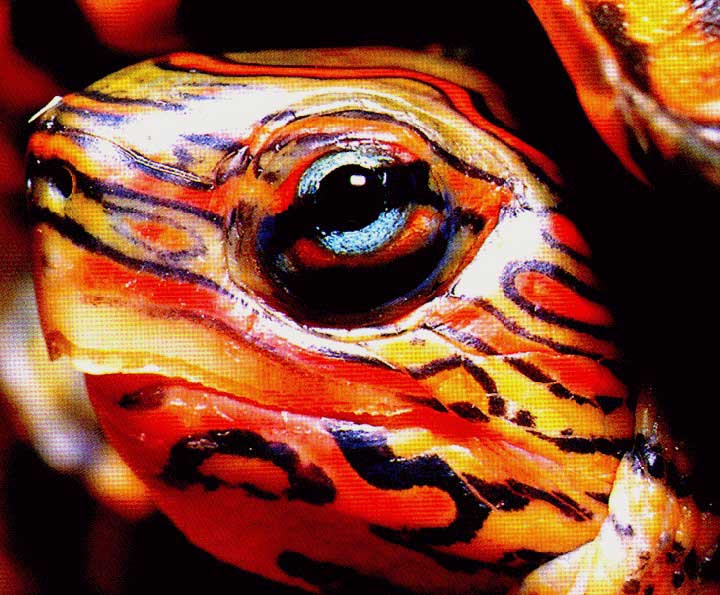
Wood Turtle Eyes, p 81 Reptiles & Amphibians |

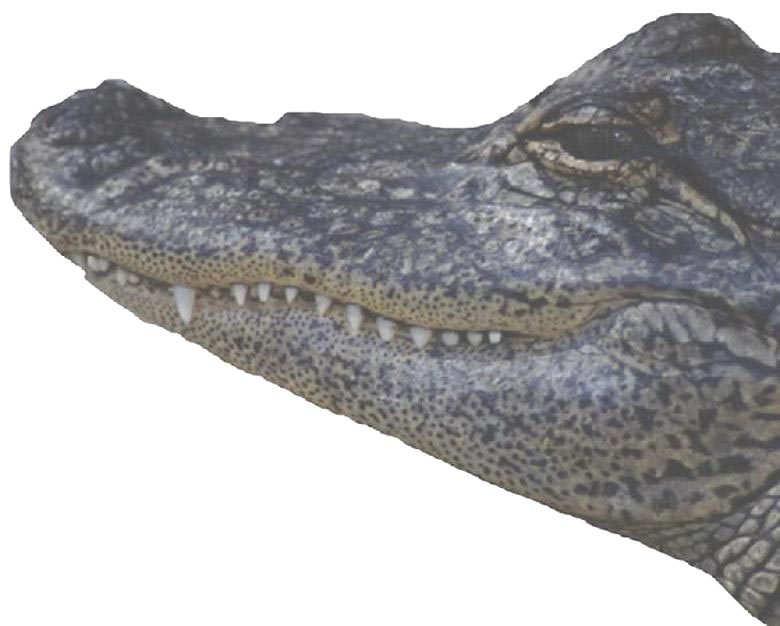
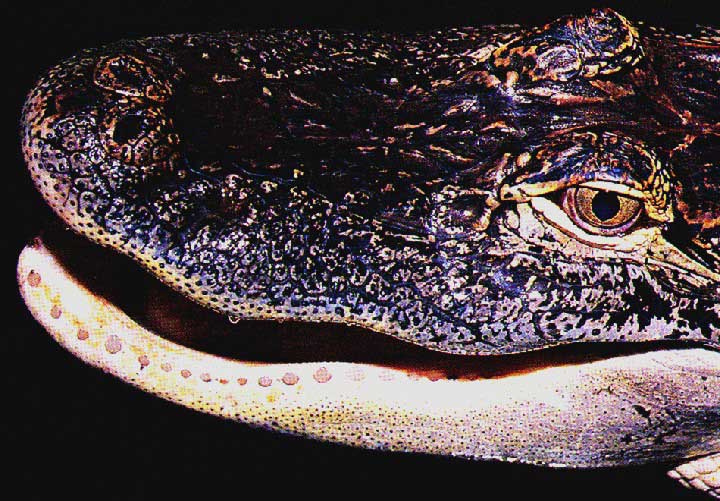
Alligator Eyes, p 82 Reptiles & Amphibians |

Smooth-Fronted Caiman Eyes, p 83 Reptiles & Amphibians |
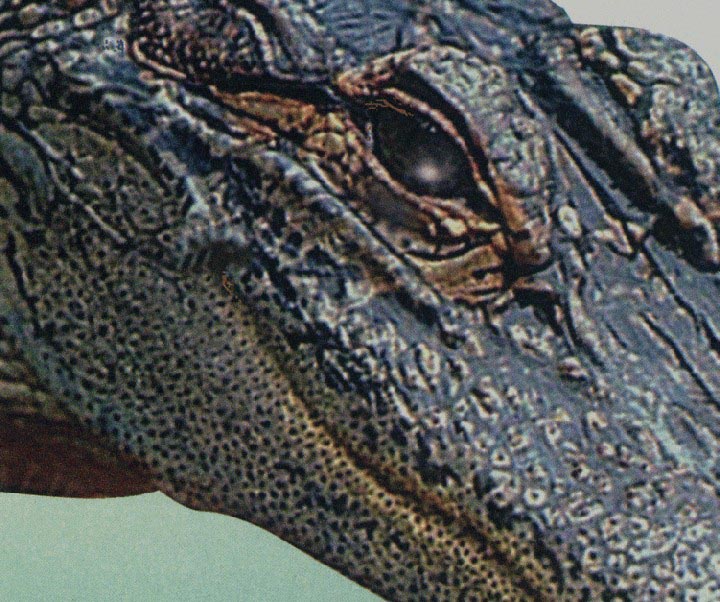
Alligator Eyes |

|
Alligator Eyes |
(Figures 3.32 through 3.37, where cited, from Reptiles & Amphibians, used by permission of the photographer and copyright owner Ryu Uchiyama, and the publisher, Chronicle Books, San Francisco, CA 94105)
